The Anatomy of a URL
What is URL
A URL (Uniform Resource Locator) is a unique web address used to locate and access specific resources on the internet.
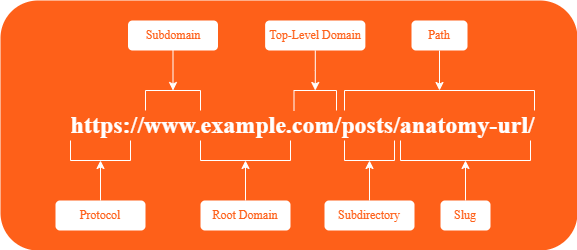
Parts of a URL
1. Protocol or Scheme
The scheme is the first part of a URL. It tells the browser which protocol to use to open a website. A protocol is a set of rules that helps the browser and website server communicate and transfer data properly.
Common Website Protocols
-
HTTP (HyperText Transfer Protocol)
- Used to transfer web pages on the internet.
- Less secure.
-
HTTPS (HyperText Transfer Protocol Secure)
- Secure version of HTTP.
- Encrypts data for safety.
- Used by most modern websites.
2. Sub Domain
A subdomain is an additional part added before the main domain name in a URL. It helps organize different sections or services of a website.
3. Root Domain
A root domain is the main name of a website. It includes the domain name and domain extension.
4. Top-Level Domain
A Top-Level Domain (TLD) is the last part of a website address that appears after the final dot . in a domain name. It helps identify the type, purpose, or country of a website.
5. Path
A path in a URL is the part that comes after the domain name. It shows the specific page, file, or location on a website.
6. Parameters
Parameters in a URL are extra pieces of information added to the URL to send data to a webpage or server. They usually come after a question mark ?.
7. Anchor
An anchor in a URL is the part that points to a specific location of a webpage. It is written after the # symbol.